REDUCE WASTE: BUY HELMUT LANG
‘Archive’ clothing continues to surge in popularity as the secondhand clothing market booms. Have we opened up yet another avenue for overconsumption, or is there sustainability in these coveted pieces' ‘emotionally durability’.
March 13, 2024
“Emotional durability” is a term coined by Jonathan Chapman who leads the PhD in Transition design at Pensylvanias Carnegie Mellon University. Lots of things are designed to last physically, but little is designed to last psychologically. We can do more to cultivate an emotional connection with our posessions so that we’re not to swept up by the longing for new forced upon us in our ever-faster fashion system and its marketing machine. “Consumers didn’t ask for pre-fall collections, cruise collections and all the rest,” says Professor Andrew Groves, fashion academic, founder of the Westminster Menswear Archive, and former fashion designer for his own label Jimmy Jumble and as senior design assistant to Alexander McQueen. “Most of us are happy with clothes for the summer and clothes for the winter. However, as Groves explaines, clothing has become an increasingly significant means of establishing a fashionable persona on social media platforms like Instagram, which demand novelty and change to feed its algorithms. Individuals are perpetually in pursuit of approval by means of constructing self-images, driven by the desire for the small endorphin rush that results from gaining likes on those sites,” He says.
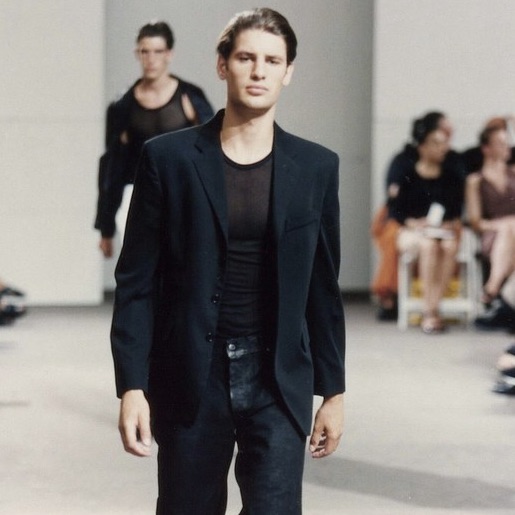
Michael Kardamakis, the Athenian founder of the Berlin based Helmut Lang archive ENDYMA (the largest of its kind) has a lot to say about what makes something emotionally durable, applying his background in art history to fashion. The desire for instantaneous approval, based on the micro trends perpetuated by social media and brands alike (for whom they are excellent marke;ng tools) – doesn’t foster an emo;onally durable connec;on between a person and their clothes. Once approval is met what’s leB but to discard the clothing – now defunct of its use – and move on to the next piece to consume. “The internet has become pretty much marketplace orientated, and it’s hard to form an identity without thinking about the kit that you need to have for it. There’s a huge increase in peoples feeling of self-doubt and depression among younger generations I can’t help but shake the feeling that this also relates to how much people are interested in creating an image of success, which is what fashion really offers, even if it’s some pretty eclectic refined niche version,”
Kardamakis is clear on how modern consump;on paEerns are short sighted. “The only thing that’s redeeming about trendy clothing is that they’re new – they’re up to date – and when they stop being up to date you have to see the things for what they are. You’re constantly being forced new product to buy, collaborations, new lines, new designers, re-brandings, and whatever, and it’s actually impossible to keep up with this and be anywhere near sustainable,” he says. The archive specialises in clothing items from 1986 to 2004, when Helmut Lang was still operating at his namesake brand. “[He] had the fantastic ability of combining a cutting-edge image – a brand that was very experimental, very progressive, and an aesthetic that felt really unique and of the moment – with very simple clothing that was inspired by everyday things. If I were to describe the sort of thing that we specialize in, it’s like your favorite thing that’s not the weirdest, not the most daring or particular, but the thing that hangs by the door; the thing that you fall back to” says Kardamakis. Whilst the Endyma archive does include ‘grail’ pieces with flair, its mostly comprised of wearable garments and accessories which are rooted in the everyday, their value is more in the nuance of adaptation and expert craftmamnship than their superficial wow factor.
“The way in which we relate to objects through symbolism plays a huge role that goes beyond the intrinsic value of the object. It becomes almost like an artwork – Its added value can be tremendous even though its just like a couple pounds worth of t-shirt fabric” says Kardamakis. The symbolism of certain clothing items makes them emotionally durable. The pieces which he chooses to wear and obtain for the archive are those “that represent all the values which for me are important. We relate to our possessions much more strongly if we have an emotional component to them”. Though Kardamakis’s interests lie in the luxury minimalism of Helmut Lang, “We can make very interesting and engaging stories about anything,” he says: “Something that someone made at home, a military garment for practical use, or something from a designer that’s super-hot right now, or from a designer that’s like completely not the thing right now. The vast majority of Helmut Lang’s work is styling choices (Stylist Melanie Ward held a lot of influence over the Helmut Lang look as creative director at the brand). Of course, the styling choices were particular enough that we can see their signatures straight away, but it was about using things that are already there and for me this is very interesting. Employees at their studio, their favorite coat, okay let’s do that [they might say], um seeing someone in the street who looks a certain way let’s do that. This makes the work very relatable independently of seasonal trends”.
There needs to be a shift in how we consume fashion. Most people know to some degree, that fashion is having a negative impact on the environment. It’s become increasingly apparent that hyper-consumerism is having a negative effect on our mental health too, drip-fed through social media. Sustainability is the hot topic burning a hole through our screens and it seems like a gargantuan task to truly achieve it. Learning to cultivate value and emotional durability in the things we buy which exceeds their material strength to me seems like a good first step. Cultivate judicioulsy, and embrace some tastefull scruffiness.